In high-hazard industries governed by frameworks such as OSHA Process Safety Management (PSM 1910.119) and the EPA Risk Management Plan (RMP), maintaining operational integrity requires strict control over changes to both physical assets and human systems.
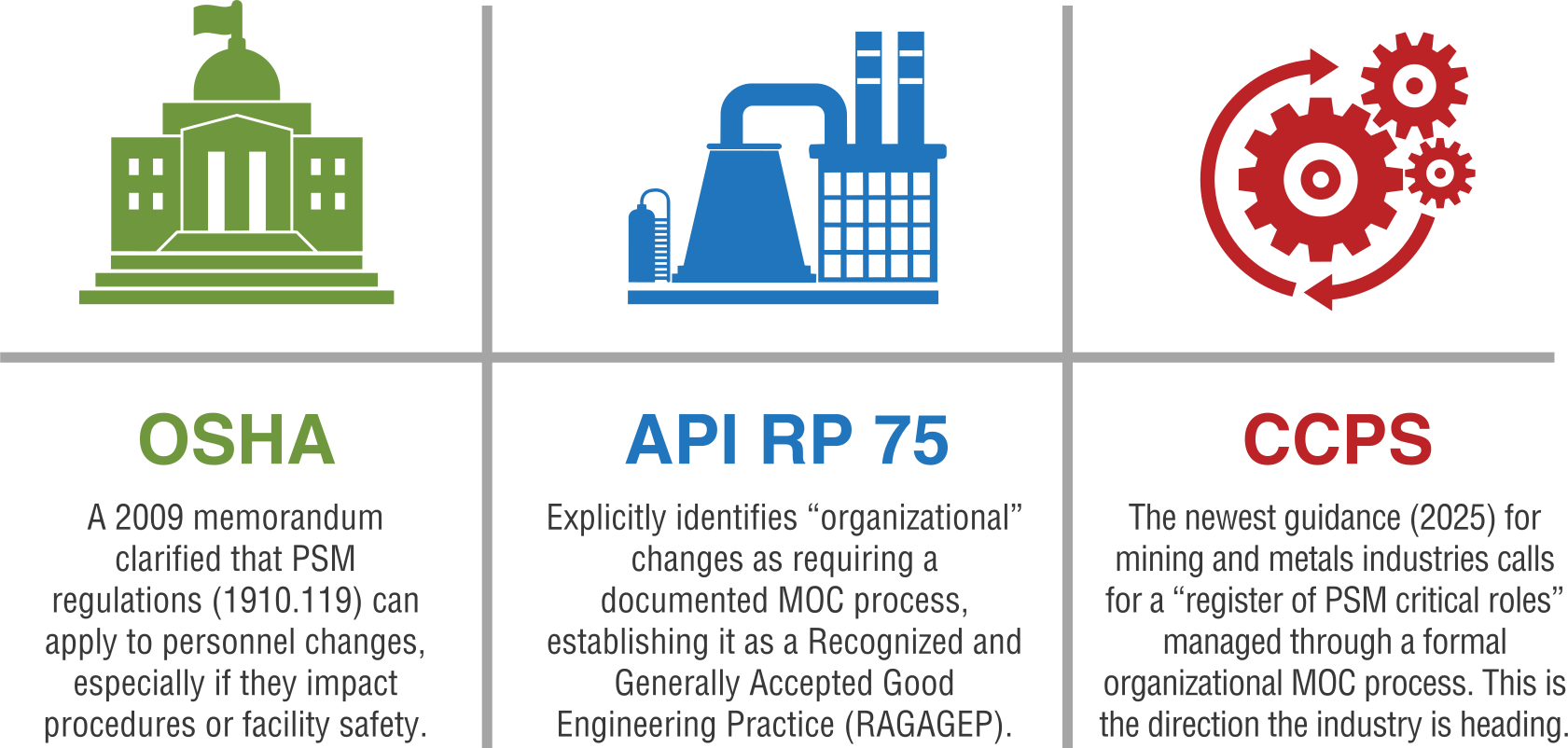
While traditional Management of Change (MOC) addresses facility and technology changes, industrial facilities must equally govern changes to organizational structures, staffing levels, and reporting lines. Our market research shows that fewer than 5% of companies in the hydrocarbon processing space have a formal management system for organizational change. However, certain Recognized and Generally Accepted Good Engineering Practices (RAGAGEPs) strongly suggest that personnel change is a critical process to manage.
Companies that want to go beyond demonstrating compliance with a conventional Learning Management System (LMS) are building a competency-centered organizational capability supported by organizational change.
Interoperability among the OESuite® Organizational & Personnel Change, Competency Management, and Learning Management System + Mobile Modules forms a foundational pillar of operational excellence and regulatory compliance, enabling a vibrant workflow that supports operational discipline.
Together, these modules ensure that when facilities alter their organizational configurations, personnel are thoroughly evaluated, trained, and verified as competent before they assume new operational risks.
How Do Core OESuite® Modules Intersect to Bridge People & Processes?
To understand how workforce capability aligns with structural governance, it is essential to examine the distinct roles and points of intersection for each module within the OESuite® ecosystem.
- OESuite® Organizational & Personnel Change – this module manages changes to staffing, reporting hierarchies, supervision, and facility staffing levels that affect process safety. Operating alongside a traditional MOC workflow, it ensures that:
- Proposed staffing or role adjustments are reviewed and approved
- Safety, environmental, and operational impacts of altering personnel configurations are analyzed
- Stakeholders and affected groups are identified and notified
- Transition processes and succession planning are managed
- OESuite® Competency Management Module – this module tracks, assesses, and verifies that employees possess the required knowledge, skills, and abilities to perform designated job roles and tasks safely and effectively. It manages:
- Progressions mapped by job descriptions, operational roles, and levels
- Job role assessments and practical evaluations to identify progressions/gaps
- Progressions and gaps toward action item closure
- OESuite® LMS + Mobile Module – this module offers robust training management along with certificate/license tracking for individual, role, group, or department. With direct interoperability with the Competency Management Module, it:
- Provides flexible delivery of learning content (i.e., SCORM, non-SCORM, AICC)
- Automates assignments and custom notifications at the training course level for the company or specific locations
- Addresses performance gaps and assign role- or regulatory-based training paths for employees and contractors.
- Tracks completion progress for computer-based training, enrollments, and acknowledgments at the training course or training program level
The Integration Workflow
When an organizational change is initiated, the Organizational & Personnel Change Module acts as the trigger, the Competency Management Module acts as the validator, and the LMS + Mobile Module acts as the enabler. As a result:
- Organizational change records are created to document the new structure or the responsibilities of the role.
- The system identifies which personnel are affected by the shift in duties.
- The workflow triggers an evaluation of targeted individuals against the requirements of their new roles.
- Required training, evaluations, and certifications are completed and verified for affected personnel.
Real World Scenario #1: Organizational Change Precedes Competency
In the lifecycle of operational maturity and risk management, Organizational Change most frequently precedes Competency, forming a logical hierarchy of governance:
[ 1. Define the Change ] → [ 2. Assess Impacts & Gaps ] → [ 3. Establish Competency/Training Plan ] → [ 4. Execute / Go-Live ]
An organization cannot accurately assess or build competency until the job's structural framework has been formally designed and approved. The Organizational Change module defines the new operational reality—new roles, altered reporting lines, and revised responsibilities. Only after these parameters are established can the Competency module determine which skills and knowledge are required to succeed in that environment.
Process safety management relies on identifying risks before they manifest on the plant floor. Managing organizational change is a proactive risk-mitigation step. Evaluating the structural viability and safety impact of a change prevents the organization from prematurely investing resources in training for roles, procedures, or structures that may ultimately be modified or rejected during the review process.
Regulatory frameworks and good engineering practices emphasize rigorous evaluation of changes to people, processes, and equipment. Auditors look for evidence that a change was systematically evaluated for safety implications before personnel were authorized to operate under the new paradigm. Establishing organizational change as the prerequisite gatekeeper ensures that competency verification is never bypassed or performed retroactively.
Real World Scenario #2: Competency Precedes Organizational Change
While the classic risk-mitigation model is the leading approach to organizational change, competency can also precede organizational change, depending on the strategic driver behind the initiative. This represents a proactive capability-building or workforce-development model.
- The Driver: Workforce upskilling, succession planning, technological advancement (such as introducing new AI tools or automation), or proactive career pathing.
- How it Works: The organization invests in developing skills and verifying competencies before formalizing a structural shift. Once a critical mass of the workforce has achieved that competency through interoperable OESuite® Modules, leadership officially triggers an organizational change to transition those individuals into newly unlocked roles, advanced operating tiers, or restructured teams.
- Primary Focus: Readiness, capacity building, and ensuring the organization has a "ready-now" talent bench before changing reporting lines or deploying new assets.
The Critical Boundary Condition: Why Competency Cannot Precede an Ill-Defined Change
While competency can precede organizational change in a planned workforce development model, that approach only works if the destination is crystal clear. If the end-state organizational structure, job roles, and operating parameters are vague or poorly defined, building competency first introduces significant operational and compliance risks:
- False sense of security and compliance gaps
- Resource waste and employee frustration
When an organization knows it needs to evolve or upskill but the final structure remains unclear, the process must temporarily revert to the standard risk-governance model: pause broad competency deployments, use the OESuite® Organizational & Personnel Change Module as an exploratory discovery tool to assess feasibility and define roles on paper, push requirements into the OESuite® Competency Management Module only after the scope of the change and the accountability matrix have been approved, and ensure training is completed through the OESuite® LMS + Mobile Module.
Ultimately, aligning these three OESuite® modules ensures that whether an initiative is driven by top-down structural reorganization or by bottom-up workforce development, human capability and operational safety remain perfectly aligned.